• Member Connection Call: Prevention

    Online

    Join MNCASA's Prevention Call to discuss prevention-related results from our member survey. Staff will share data and facilitate a discussion on how to better meet the needs of members implementing primary prevention programming.
  • MNCASA Annual Meeting

    Online

    More information will be shared closer to the event.

  • SART Connection Call – PREA & SARTs: Building Connections Across Systems

    Online

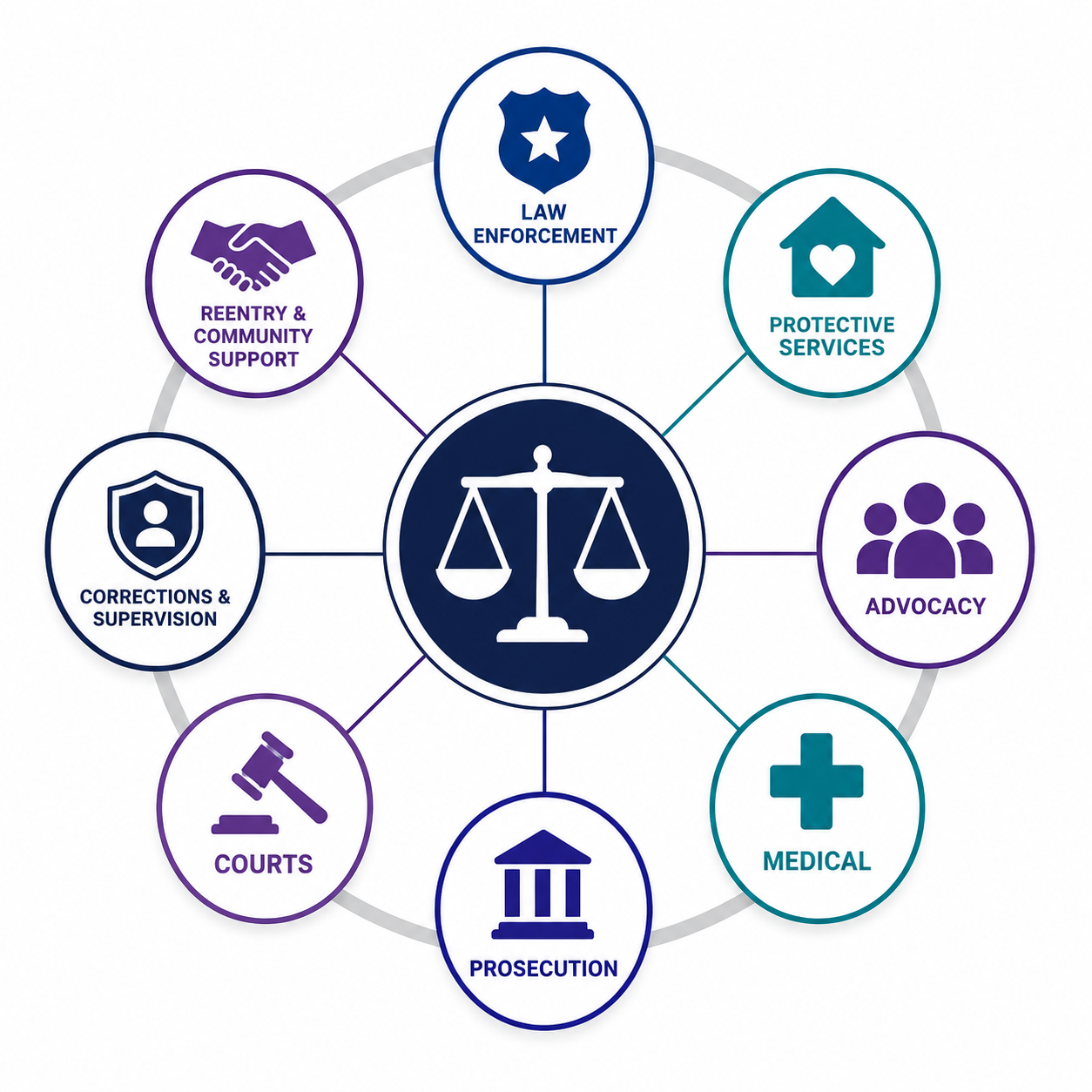
    Sexual Assault Response Teams (SARTs) play a critical role in supporting survivors across every system, including correctional settings. This month's call explores how SARTs can strengthen collaboration with facilities implementing the Prison Rape Elimination Act (PREA), and how multidisciplinary partners can work together to improve coordinated responses for people who experience sexual assault while incarcerated. […]

  • Virtual Mid-Level Manager Roundtable

    Online

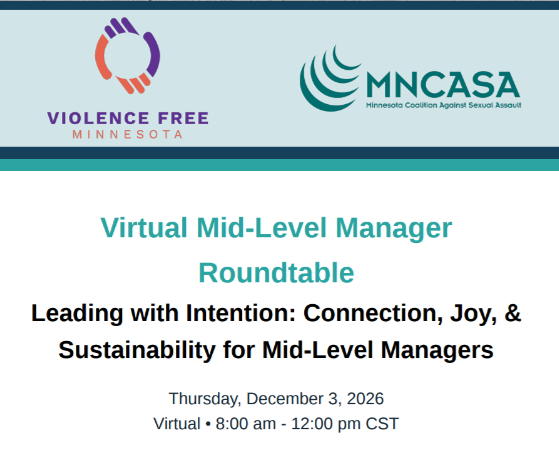
    Join the Minnesota Coalition Against Sexual Assault (MNCASA) and Violence Free Minnesota (VFMN) for an intentional space designed for mid-level managers to connect with peers, learn together, and reflect on their leadership. This half-day virtual roundtable will feature a keynote presentation by Mary Mackie of Mosaic Vermont, along with two facilitated discussions led by VFMN […]

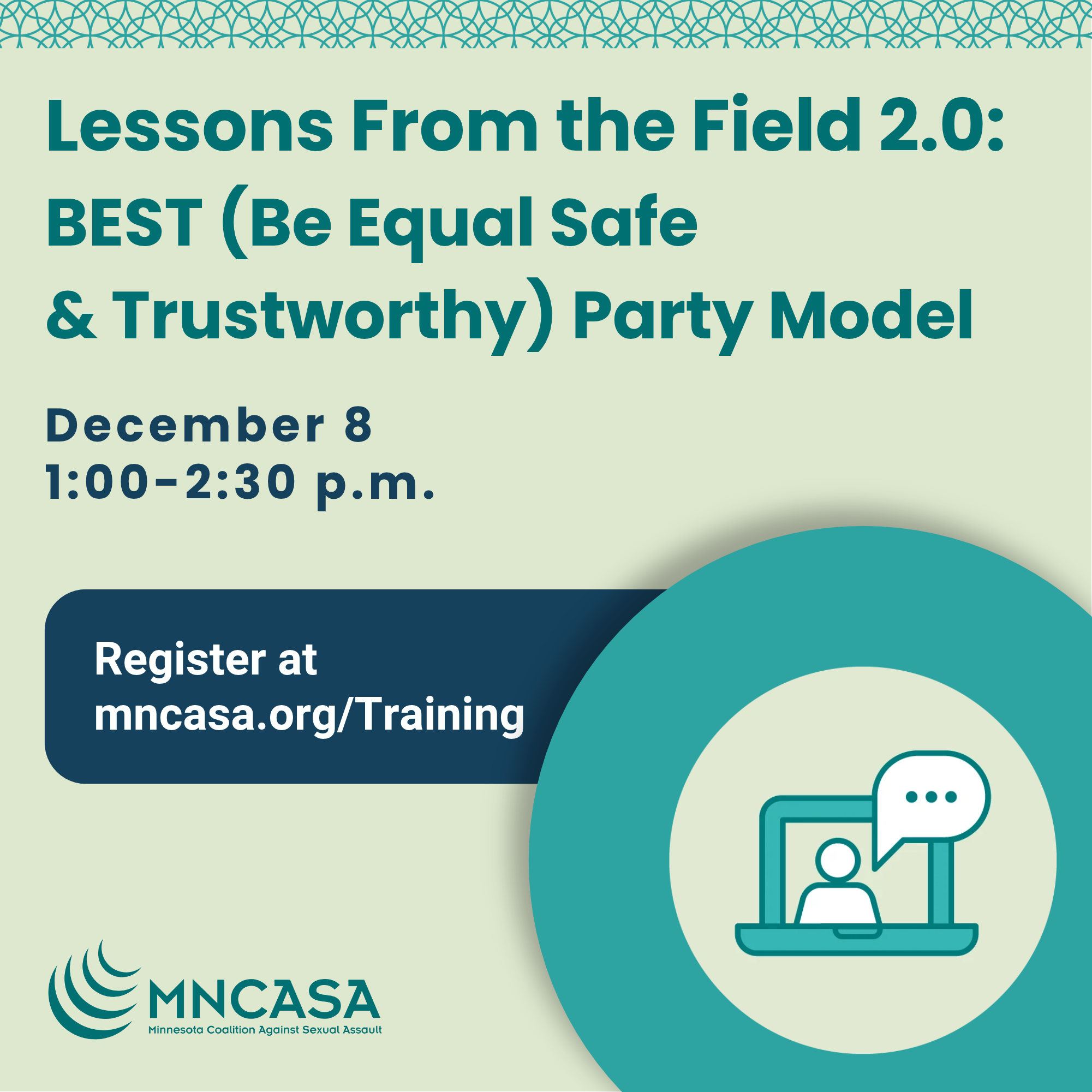
  • Lessons From the Field 2.0: BEST (Be Equal Safe & Trustworthy) Party Model

    Online

    Join MNCASA and Sean Elmquist from Men As Peacemakers to explore the BEST (Be Equal Safe & Trustworthy) Party Model, an innovative, comprehensive approach to preventing sexual violence and sexual misconduct on college campuses. A curriculum for athletic teams, fraternities and sororities, BEST integrates proven primary prevention strategies, student-informed methodologies, and approaches for reimagining and […]

  • SART Connection Call – Lost in Translation: Language & System Access

    Online

    How we communicate can either open doors or create barriers to accessing services. This conversation will explore how language, terminology, interpretation, communication practices, and system design can shape whether survivors feel heard, understood, and able to navigate a coordinated response. Together, we’ll consider what SARTs can do to make access more welcoming, understandable, and survivor-centered. […]